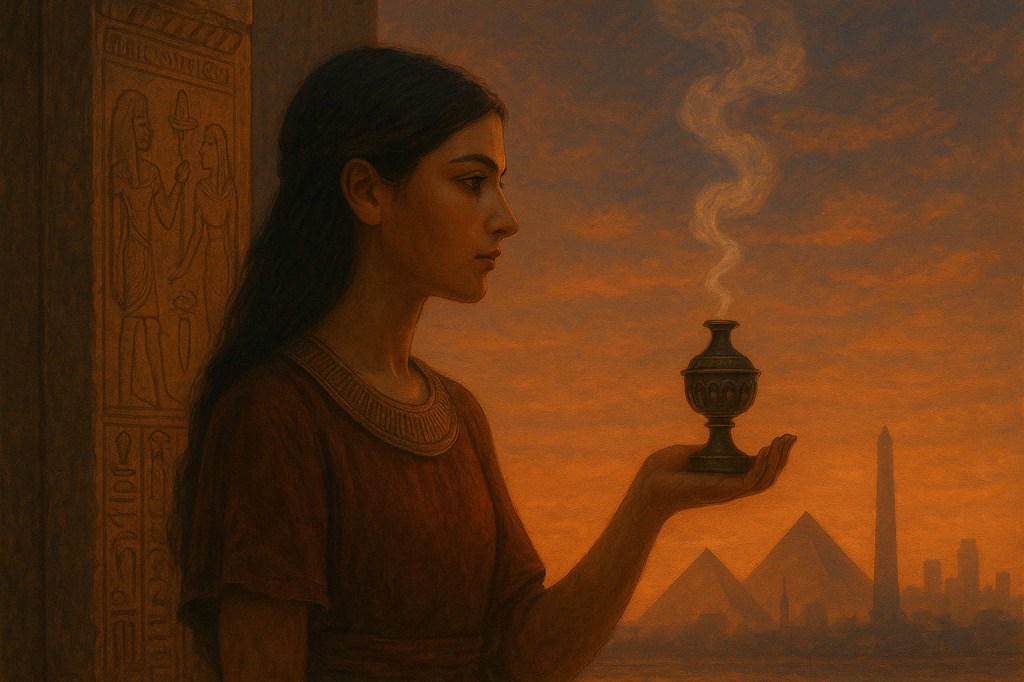
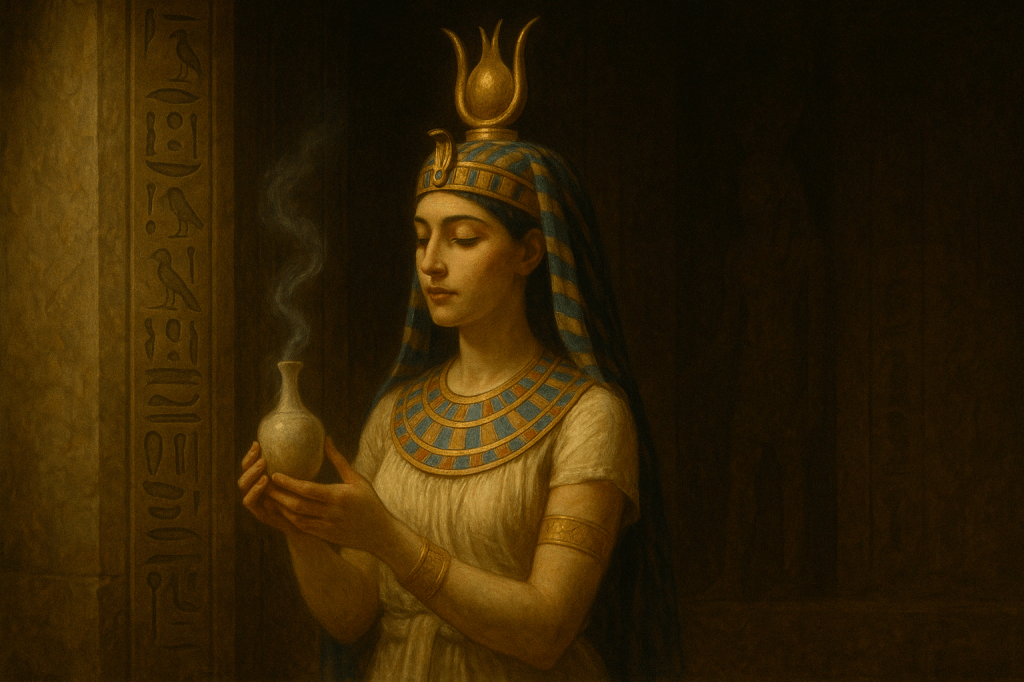
• The Scent of Conquest: How Cloves Became Currency and Control

    After Vasco da Gama opened the sea route to India in 1499, Europe began redrawing the map of fragrance—not with ink, but with sails and salt. Yet the real war of scent didn’t begin in India. It began thousands of miles farther east, across the equator, on a cluster of small, fertile islands now known as the Maluku Islands of Indonesia—once called the Spice Islands.

    These islands were the world’s only source of clove at the time. Small, unopened flower buds, cloves were far more than flavoring agents in medieval Europe. They masked the stench of crowded cities, were burned to purify churches, carried as talismans against plague, and symbolized sanctity and sophistication. A handful of clove was worth more than gold. To dominate the islands that bloomed with that scent meant controlling not only a commodity but an entire olfactory empire.

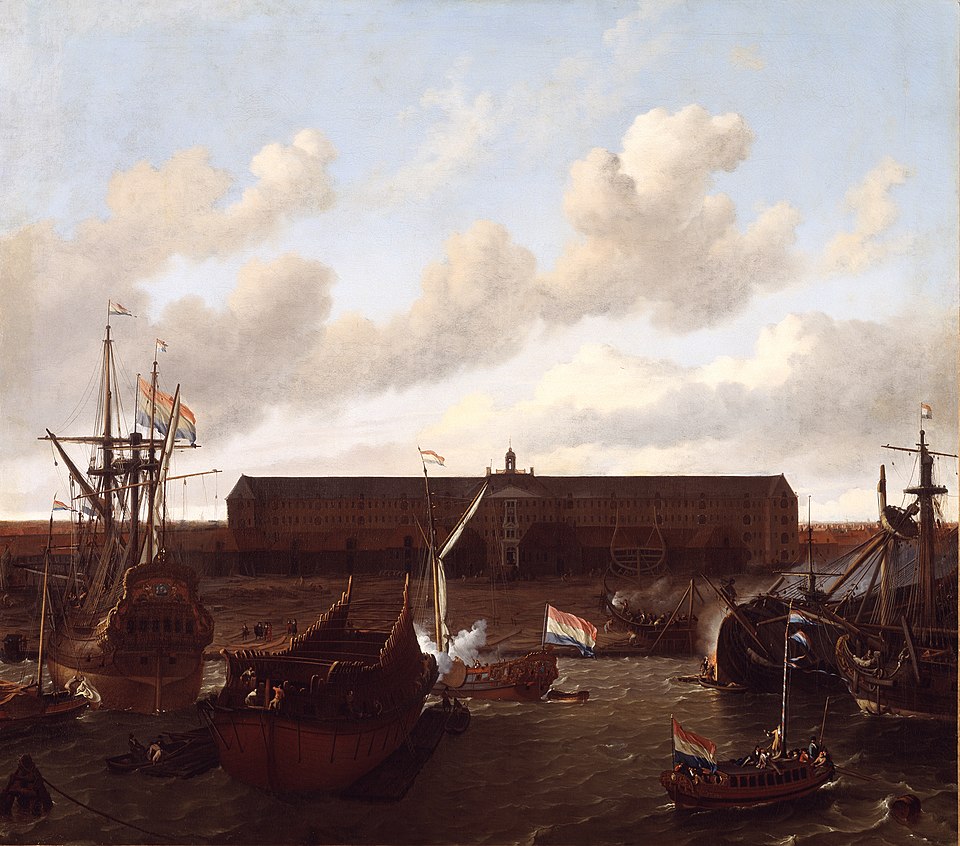
    In 1602, the Dutch East India Company(Verenigde Oostindische Compagnie) -the VOC-was established, not as a mere trading body, but as a corporate leviathan with powers to wage war, sign treaties, and colonize territories. By 1605, Dutch forces landed in Ambon, one of the key Spice Islands, ousting Portuguese traders and laying claim to clove production. From then on, every tree, every bud, and every islander fell under the VOC’s iron grip.

    Growing a clove tree without permission became illegal. Farmers could only harvest a set amount. VOC guards patrolled the archipelago. Storage depots dotted the islands like foreign fortresses. But economic control wasn’t enough. The VOC began systematically destroying clove trees on rival islands to inflate prices—burning forests, uprooting groves, and executing those who dared smuggle or plant them without sanction.

    This was the beginning of scent as strategy, and fragrance as violence. Cloves became an object of economic desire and colonial cruelty.

    By the time these buds made their way to Amsterdam, and then into the hands of perfumers in Paris and London, they were no longer the product of sun-soaked equatorial soil. They had been transformed—filtered through the colonial imagination and bottled as “Oriental,” “Exotic,” “Intense.” These weren’t just olfactory notes. They were carefully constructed fantasies—fragrances designed to evoke not the lived reality of Indonesian farmers, but a sanitized, luxurious vision of the ‘other.’

    The labor, the saltwater crossings, the scorched earth, the blood in the soil—none of that was captured in the bottle. Consumers in Europe smelled sophistication, not suffering. The clove had traveled so far that its origin story had vanished into vapor. The political economy of scent had evaporated into a few drops on a silk collar, leaving behind only a trace of empire—undetectable, but never absent.

  • The Economics of Scent: Spice Routes, Perfumers, and the Politics of Fragrance

    In medieval Europe, few substances were more valuable than scent. Not merely for delight, fragrance was tied to medicine, spirituality, and social class. But behind every vial of rosewater or stick of incense lay a web of power—stretching across continents, involving merchants, monarchs, and emerging professionals known as perfumers.

    From the 12th to the 16th century, the trade of aromatic substances such as frankincense, myrrh, cinnamon, and musk was as important—and sometimes more lucrative—than gold. These goods arrived through long-established spice routes, controlled first by Arab merchants, then by Italian city-states like Venice and Genoa, who monopolized trade with the East via the Levant.

    By the late 13th century, Venetian merchant fleets transported large quantities of aromatics from Alexandria and Constantinople into Europe, selling them at extraordinary prices to royal courts, churches, and wealthy apothecaries. Frankincense from Arabia, sandalwood from India, and civet from North Africa were not just products; they were instruments of diplomacy, tools of influence.

    As demand for fragrance grew among European elites, especially in Florence, Paris, and Avignon, so too did the profession of the perfumer. Initially tied to apothecaries and pharmacists, perfumers began to organize into guilds—professional associations that regulated quality, pricing, and production methods. The Maîtres Gantiers-Parfumeurs in France, for instance, held royal charters by the 17th century, and earlier versions of these organizations can be traced to the Renaissance.

    In cities like Grasse, known originally for tanning leather, the unpleasant odor of animal skins led artisans to treat gloves with aromatic oils—giving birth to a new local industry. Over time, Grasse would evolve into the epicenter of French perfumery, but its origins lay in a pragmatic effort to make leather bearable.

    The wealthy didn’t simply wear fragrance—they collected it, commissioned it, taxed it. In Florence, the Medici family financed voyages in part to secure control over spice and scent supplies. In the Burgundian court, perfumed materials were logged in household accounts alongside weapons and jewels. Scent, like gold, was a marker of sovereign taste—and sovereign control.

    And control mattered. When the Portuguese opened direct sea routes to India in the late 15th century, bypassing Venice, the balance of scent power began to shift. Suddenly, fragrance was no longer the privilege of a few Italian traders. The age of global fragrance capitalism had begun.

    By the time of the Renaissance, to smell refined was not only to be clean or fashionable—it was to declare one’s access to global networks of power and trade. A single drop of imported attar, a pouch of cloves, a stick of cinnamon could speak volumes about wealth, allegiance, and ambition.

    Scent had always been spiritual. Now, it was geopolitical.


    📚 About This Series

    Fragrance History: From Temples to Thrones explores the hidden influence of scent through history—from ancient rituals to global commerce, from silent power to personal expression.

  • 🌿 The Emperor’s Scent: Napoleon, Eau de Cologne, and the Birth of Perfume Branding

    Columns of soldiers marched across the war-torn landscapes of Europe, leaving behind not only the scent of iron and gunpowder—but sometimes, a trail of citrus carried on the breeze.

    In the mid-18th century, Europe was ablaze with conflict.
    During the Seven Years’ War (1756–1763), French troops stationed near the city of Cologne encountered something extraordinary: a new kind of fragrance, Eau de Cologne.

    In 1709, an Italian-born perfumer named Giovanni Maria Farina had crafted a scent unlike anything Europe had known.
    Where traditional perfumes clung heavily to musk and animalic richness, Farina’s creation danced with light citrus notes—lemon, orange, bergamot, neroli—capturing the crispness of an Italian morning.

    For the weary soldiers, Eau de Cologne was more than a fragrance.
    It was a breath of freshness, a reminder of life beyond the smoke and the mud.

    When the war ended, these soldiers returned to France carrying not just memories, but bottles of this invigorating scent.
    Eau de Cologne soon made its way into the French aristocracy, gaining a foothold in salons, boudoirs, and even royal courts.

    Among those who fell under its spell was a rising young officer—
    Napoleon Bonaparte.

    While the French elite clung to heavy musk-based perfumes, Napoleon chose something different.
    He preferred the sharp, clean vitality of Eau de Cologne, a scent that seemed to slice through the stagnant air of war councils and ceremonial halls alike.

    According to his valet Louis Constant, Napoleon’s use of Eau de Cologne bordered on obsession.
    He would bathe in it, douse his body and garments, and travel with several bottles at hand.
    Some accounts claim he ordered up to 60 bottles per month.

    For Napoleon, Eau de Cologne was more than personal taste.
    It was mental clarity, resilience, and invisible armor—the crisp signature of a man determined to conquer not just territories, but the very senses of those around him.

    Yet the emperor’s downfall unleashed a different kind of battle.

    After Napoleon’s exile and death, perfume houses across Europe rushed to associate themselves with his legend.
    “Napoleon’s Cologne” became a coveted name—but one claimed by many.
    In Cologne, rival shops sprang up, each asserting that they were the true heirs to Farina’s original formula.

    At the time, trademark laws barely existed.
    Anyone could use the name “Eau de Cologne,” and many did.

    The original Farina family, whose creation had seduced a generation, found their name diluted amid a flood of imitators.
    The confusion and disputes over the right to use the name fueled early calls for formal brand protection across Europe.

    In fact, during Napoleon’s reign in 1810, a decree had been issued requiring medical products to disclose their ingredients—but perfumes were exempt, preserving their recipes as guarded secrets.
    Perfume, even then, was recognized as more than a formula; it was story, mystique, and identity.


    By the mid-19th century, as trademark registration systems slowly emerged, the battle over Eau de Cologne had already demonstrated a simple truth:
    In the world of fragrance, the name could be as valuable as the scent itself.

    Today’s iconic perfume brands owe their existence to these early struggles.
    Behind every elegant bottle lies a history of soldiers, emperors, and artisans who understood that scent is not just a luxury—it is memory, power, and legacy.

    The emperor may have fallen, but his fragrance still lingers in the air.

    About This Series

    Fragrance History: From Temples to Thrones is a journey through the forgotten pathways of scent, revealing how fragrance shaped civilization, power, art, and identity across the ages.

  • Perfume and Power: The Fragrant Court of Versailles

    At Versailles, fragrance floated through the air like a second language—one spoken not with words, but with presence, proximity, and influence.

    By the 17th century, France had become the undisputed center of perfumery. But this shift didn’t happen in merchants’ stalls or pharmacy basements—it took root in the very heart of political power: the royal court. In the age of Louis XIV, perfume was not a matter of private vanity. It defined status, diplomacy, and identity.

    The king himself, known as the Sun King, was famously devoted to scent. His morning routine involved washing with aromatic waters, wearing scented gloves, and selecting specific fragrance blends created by court perfumers. He was even given the nickname le doux fleurant—“the sweetly scented one.”
    For Louis, fragrance was an extension of image. A carefully chosen aroma conveyed vitality, divine favor, and a sense of refinement expected from the highest authority in the land.

    But in truth, Versailles needed all the fragrance it could get.

    Despite its grandeur, the palace was infamous for its poor hygiene. Bathing was rare, plumbing was limited, and perfumed powders became a necessity to mask the realities of court life. In such a climate, scent wasn’t merely decorative—it was defensive. The right perfume protected against unpleasant odors, but also against social ruin.

    To smell right was to belong.
    To misstep—even olfactorily—meant risking one’s place in the courtly hierarchy.

    Perfume became etiquette. Courtiers commissioned custom scents to match their roles, moods, or political alliances. A blend of orange blossom and ambergris might signal favor. A heavy dose of musk could be read as ambition—or threat. Whispered rumors often clung to scents as much as they did to words.

    Beyond the palace, this olfactory culture began to shape France’s economy.

    The town of Grasse, originally known for tanning leather, transformed into a center for scented goods. Local craftsmen learned to mask the harsh odor of leather with floral infusions. Over time, Grasse evolved into the world’s most renowned perfume region, producing raw materials that supported a growing national industry.

    The monarchy formalized fragrance production. Court perfumers were granted official titles, recipes were guarded like state secrets, and certain families became known across Europe for their mastery of scent. Perfume had entered the realm of power—tied to legislation, export trade, and national identity.

    By the 18th century, figures like Madame de Pompadour and Marie Antoinette helped refine the art of perfumed self-presentation. Elaborate scent rituals became part of royal life and courtly seduction. Bottles were exchanged as gifts, scents used to negotiate loyalty, and compositions commissioned to reflect personality or politics.

    But this golden age of royal fragrance would soon give way to revolution—and reinvention.

    As powdered wigs fell and thrones were overturned, the world of scent shifted once more.
    And in the embers of empire, a new figure rose—one who wielded perfume not for elegance, but for legacy.

    Napoleon Bonaparte’s obsession with fragrance went far beyond personal taste. For him, scent was ritual, power, and even legal territory.
    Napoleon’s Cologne and the First Fragrance Trademark Wars


    Coming Next in the Series

    Next, we follow perfume through the Revolutionary era into the hands of an emperor. Learn how Napoleon’s legendary use of Eau de Cologne reshaped the perfume market—and how a battle over his name laid the foundation for modern trademark law in the fragrance world.


    About This Series

    Fragrance History: From Temples to Thrones is a journey through time, tracing the power of scent across cultures, empires, and ideologies. From sacred offerings to sovereign signatures, this series explores how fragrance became one of history’s most elegant instruments of influence.

  • It wasn’t war or trade that brought the art of perfumery to France.
    It was a wedding. And a woman named Catherine de’ Medici.

    In 1533, a 14-year-old Catherine—niece of Pope Clement VII and member of the powerful Florentine Medici family—was married off to the future king of France, Henry II. Though arranged for political convenience, the marriage became a vehicle for cultural transformation—one scented in Florentine sophistication. She arrived in France not only with chefs and astrologers, but with a secret weapon: her personal perfumer, René le Florentin.

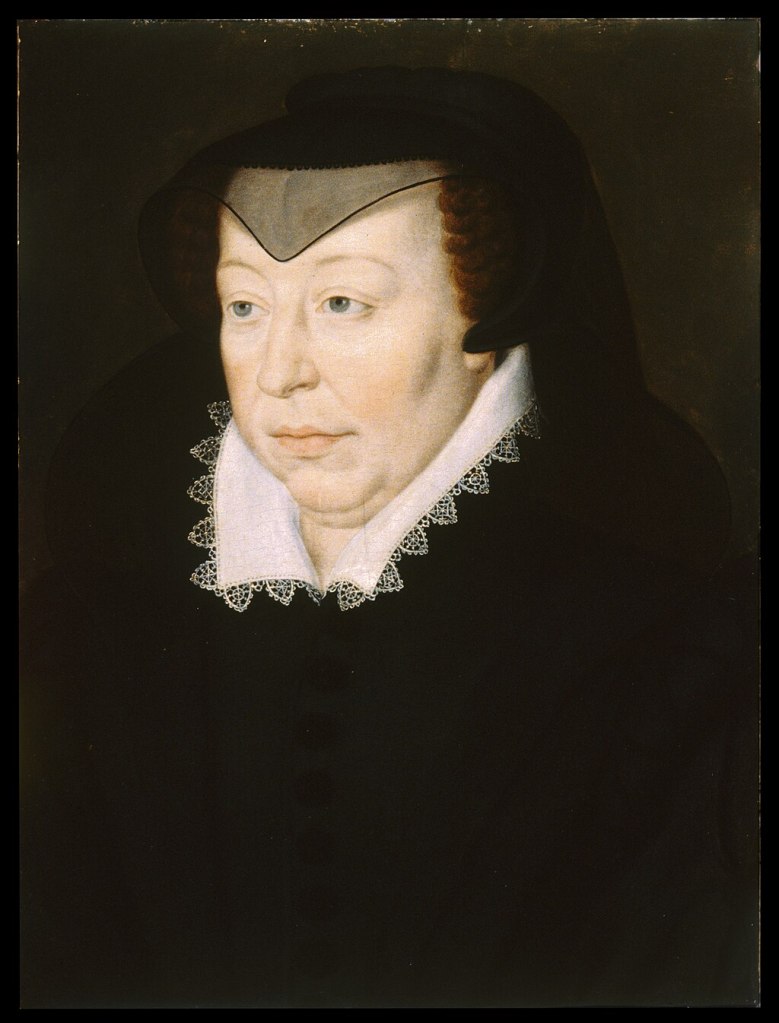
    Formal portrait of Catherine de’ Medici by François Clouet, showing the French queen in richly detailed attire, evoking her elegance, political intelligence, and influence in spreading Italian perfumery.
    “Portrait of Catherine de’ Medici” by François Clouet (c.1550s) – A queen whose elegance masked influence. Through the subtle use of scent, Catherine turned fragrance into diplomacy, strategy, and legacy. Public Domain via Walters Art Museum / Wikimedia Commons.

    René wasn’t just a master of scent. He was also an alchemist, a pharmacist, and—according to some scandalous whispers—a poisoner. In the paranoid courts of 16th-century Europe, it wasn’t unusual to suspect that a whiff of perfume might carry more than just fragrance. Some believed Catherine’s scented gloves were laced with lethal substances. Whether true or not, these rumors gave her an aura of power wrapped in mystery—danger that smelled divine.

    Perfume at the time was still a novelty in France. While Italians had refined the craft with distilled alcohols, essential oils, and exotic resins, the French were still masking odors with rose water or burning herbs. René changed that. Under Catherine’s patronage, he established one of France’s earliest perfume laboratories within the shadowy tunnels beneath the Queen’s residence in Paris—the Tuileries Palace. Here, perfumes were developed not just to delight but to manipulate, seduce, and protect.

    Catherine helped spark a national obsession. Her fondness for scented gloves, imported Florentine oils, and luxurious bath essences quickly spread through the French court. Soon, perfumed gloves became a fashion essential for noblewomen, and fragrant oils were seen as a mark of refinement. The Medici style had taken root in French soil.

    Perfume carried more than beauty—it conveyed power.

    Catherine wielded scent the way she wielded influence: strategically. She understood that fragrance could control impressions, reinforce identity, and even intimidate rivals. She surrounded herself with scent—on her skin, in her hair, infused into the very fabrics she wore. In a court filled with suspicion and intrigue, Catherine didn’t just wear perfume. She weaponized it.

    By the time her son, Charles IX, ascended the throne, the French elite were fully intoxicated with Italian-style fragrance. Perfume had become not only fashionable but institutionalized. Grasse, a sleepy town in southern France known for tanning leather, began shifting toward perfumed glove production—a change that would eventually make it the perfume capital of the world.

    So, when we think of France as the global home of luxury perfume, we owe a quiet nod to a clever teenage queen from Florence who arrived not with swords, but with scent.
    Catherine de’ Medici didn’t just bring perfume to France.
    She brought power, wrapped in roses.

  • The Renaissance Revival: When Italy Reignited the World of Scent

    As the Renaissance reawakened art and philosophy, it also rekindled the ancient language of scent.

    In the early 15th century, as Florence, Venice, and Rome flourished with humanist ideals and artistic revolutions, the use of perfume quietly began its own rebirth. The rigid morality of the medieval Church was giving way to a more sensual, sensory understanding of the world. Beauty was no longer seen as sinful—it became a reflection of divine order, and fragrance was embraced as both an aesthetic and intellectual pursuit.

    At the center of this transformation was Venice, a glittering port city and global trade hub. Thanks to its connections with the Middle East and North Africa, Venice became the gateway through which rare aromatics like frankincense, myrrh, ambergris, musk, and exotic spices flowed into Europe. Apothecaries and merchants experimented with distillation techniques, blending oils and resins with increasingly refined alcohol bases—a process first perfected by Arab chemists and now repurposed for beauty, medicine, and sensual delight.

    This was also the period when alchemy met artistry. Renaissance thinkers saw no contradiction between the mystical and the material. Alchemists viewed perfume as an invisible force—a way to capture the spirit of nature. Recipes were kept secret, shared only among artisans, monks, and scholars who believed that scent, like gold, could elevate the soul. Distillation tools improved, and for the first time, perfumers began to emerge as specialized artisans rather than herbal generalists.

    One cannot discuss this era without mentioning Florence, where the concept of bellezza—beauty—was treated almost like a civic virtue. The Florentine elite considered personal scent an essential extension of one’s presence and reputation. Perfumed gloves, scented fans, and customized oils were exchanged as gifts, symbols of status and sophistication. The line between fragrance and identity blurred.

    In this vibrant cultural climate, perfume crossed a new threshold: it became political.

    Nobility began to use signature scents as part of their public persona. A perfumed glove was more than a fashion statement—it was a signal of refinement, wealth, and even diplomatic intent. The Medici court, in particular, treated fragrance not merely as indulgence, but as image control. From diplomatic banquets to religious festivals, scent marked one’s place in the social order.

    And yet, perhaps the most influential act of this fragrant renaissance was one that left Florence behind entirely.

    When a young Florentine noblewoman named Catherine de’ Medici married the future king of France, she didn’t just bring jewels and cooks—she brought a perfumer. And with him, the secrets of Italy’s aromatic world quietly crossed the Alps.
    Read the full story of Catherine’s fragrant legacy →

    🔍 The Medici Scent Legacy
    How Catherine de’ Medici Used Perfume to Influence a Kingdom
    Long before Chanel or Dior, there was Catherine de’ Medici—a queen who used scent not only as a personal adornment but as a political tool.
    When the teenage Catherine left Florence in 1533 to marry the future King Henry II of France, she brought with her a carefully selected entourage of Italian artisans. Among them was René le Florentin, a perfumer trained in alchemical traditions. In the French court, where suspicion of the Italian outsider ran high, René quietly built a laboratory near the Queen’s chambers in the Louvre, developing complex perfumes and aromatic gloves tailored to Catherine’s refined Florentine tastes. Her signature scent, blending neroli, bergamot, and jasmine, was considered so distinctive that courtiers claimed they could sense her approach before seeing her. This was no accident—it was intentional branding. Catherine understood the power of identity, and fragrance became her invisible aura of authority.
    But her perfumes carried more than allure. Whispers in the court suggested that her scented gloves might conceal poison. It’s unclear whether this rumor originated from actual incidents or xenophobic paranoia, but the story spread quickly. Catherine, already viewed as a schemer and foreign manipulator, was recast in whispers as a perfumed assassin—a woman whose charm masked deadly intent.
    Though no evidence ever confirmed the poisonings, the association of perfume with political intrigue was cemented. This moment in history reveals more than gossip—it shows how fragrance had become strategy. In a time when alliances were fragile and image was everything, Catherine weaponized scent as a soft but potent form of power.
    Moreover, her legacy helped lay the groundwork for France’s rise as the world’s perfume capital. The popularity of perfumed gloves soared, and the town of Grasse began scenting leather to hide the harsh smell of tanning. Eventually, it transitioned into a perfume production hub that still thrives today.
    Catherine’s story is not just about perfume—it’s about how fragrance can frame a persona, influence perception, and quietly shape the course of history.

    Back in Italy, perfumers were gaining more than status—they were gaining structure. By the late 1500s, perfume recipes were being documented, apothecaries licensed, and city guilds formed around the craft. In Venice, perfume became so intertwined with its identity that visitors described the city as “a place where even the wind smells rich.”

    Meanwhile, the philosophical view of fragrance evolved. Thinkers like Marsilio Ficino and Girolamo Fracastoro wrote about scent’s effect on the soul and the senses. Ficino believed certain perfumes could elevate the spirit, promote love, or connect the individual to celestial harmonies. This wasn’t just pseudo-science—it was deeply woven into the Renaissance worldview, where art, health, and spirituality existed on the same continuum.

    By the end of the Renaissance, perfume had fully returned—not merely as a means of masking odor, but as a cultural artifact, a personal signature, and a political tool. And while Italy planted the seeds of this fragrant revival, it would be in France that those seeds truly blossomed into an empire of scent.


    Coming Next in the Series

    In Part 3 of Fragrance History: From Temples to Thrones, we enter the gilded age of royal courts—from Louis XIV’s perfumed palace to Napoleon’s obsessive scent rituals. Learn how perfume became a matter of image, diplomacy, and imperial ambition.
    Look out for Part 3: “Perfume and Power in the Age of Kings”


    About This Series

    Fragrance History: From Temples to Thrones traces the extraordinary evolution of scent across centuries—from sacred rituals and spiritual protection to the political strategies of queens and emperors. This series reveals how fragrance has shaped civilization, status, and identity in ways most people never imagined.
  • Before Perfume Was Luxury: A Journey Through Sacred Scents and Medieval Survival

    Imagine a world where the air itself was sacred—where a single wisp of smoke could carry your prayers to the gods, or shield you from unseen death. Before fragrance became fashion, it was magic, medicine, and mystery.

    In ancient Egypt, perfume was more than adornment—it was an offering to eternity. The temples of Karnak and Luxor were once thick with sacred smoke, rising skyward in rhythmic trails. Among the most revered scents was Kyphi, a deeply symbolic incense burned at sunset to honor the gods and cleanse the spirit. Its formula, recorded on temple walls and in medical papyri like the Ebers Papyrus, included over a dozen ingredients: myrrh, frankincense, cinnamon, raisins, juniper, honey, wine, and even galbanum. The mixture wasn’t just aromatic—it was therapeutic, believed to ease anxiety, aid sleep, and treat respiratory ailments. Kyphi was the first known fragrance to live at the intersection of medicine, ritual, and art.

    The Greeks and Romans inherited and elaborated this sacred relationship with scent. In Rome, perfumed oils were woven into the daily lives of the elite. Emperors bathed in rosewater, feasts were clouded with spiced vapors, and the dead were embalmed in aromatic balms. Yet, with the fall of Rome and the rise of Christianity, the golden age of scent dimmed.

    In the early medieval Church, sensory indulgence was viewed with suspicion. Scented oils and perfumes—once divine—became associated with temptation, pride, and sin. The body was to be denied, not celebrated. The air, once filled with perfume, grew still.

    But behind the cold stone walls of monasteries, fragrance quietly endured. Monks preserved ancient medical texts, including Galen’s and Dioscorides’s herbal knowledge. In particular, the 12th-century Benedictine abbess Hildegard von Bingen, a polymath mystic and physician, wrote extensively about the healing properties of aromatic plants. She prescribed lavender to “soothe the restless mind” and fennel for purification, combining spiritual and physical restoration through scent.

    By the 11th century, the Salerno School of Medicine—Europe’s first organized medical university—emerged in southern Italy. It integrated Greek, Arab, and Christian medical wisdom, emphasizing the role of scent in both preventive care and spiritual balance. There, remedies blended herbalism with early aromatherapy: myrtle for calming fevers, rosemary for memory, sage to purify the air. Scent became a medical defense—subtle, invisible, yet potent.

    Outside these havens of knowledge, life in medieval cities was anything but fragrant. Open sewers, livestock in the streets, and overcrowded markets created an atmosphere heavy with decay. People believed in miasma theory—the idea that diseases spread through bad smells. As a result, perfumed objects became protective talismans. Wealthy citizens carried pomanders, small perforated orbs filled with clove, musk, and ambergris. Hung from belts or rosaries, they were both status symbols and shields against the unseen.

    When the Black Death swept through Europe in the 14th century, scent became a matter of life and death. Plague doctors donned long robes and beaked masks stuffed with lavender, rose petals, or camphor. The aromatic blend was meant to purify the air, ward off evil vapors, and create a barrier between life and the rot of death. Though primitive by modern standards, the logic was rooted in ancient understandings of scent as sacred protection.

    By the late Middle Ages, fragrance was once again inching toward acceptance—not as vanity, but as vitality. It was used to anoint the sick, to comfort the grieving, and to protect the body from corruption. The silence that had surrounded scent was breaking, and with the dawn of the Renaissance, perfume would soon step back into the light—not just as a ritual, but as art.


    Next in the Series

    In the next chapter of Fragrance History: From Temples to Thrones, we travel to Renaissance Italy, where perfume experienced a dramatic rebirth. From the powerful Medici family to alchemists-turned-perfumers, discover how fragrance reemerged as a symbol of status, sophistication, and even statecraft.
    Coming soon: “The Renaissance Revival: When Italy Reignited the World of Scent”


    About This Series: Fragrance History: From Temples to Thrones

    This blog series explores the captivating journey of fragrance through time—from sacred rituals in ancient temples to the perfumed halls of royal courts. Each post uncovers how scent shaped culture, power, health, and beauty across civilizations.
    Whether you’re a history lover, a scent enthusiast, or simply curious about how perfume became part of human identity, you’re invited to follow the trail of aroma across centuries.

  • The Future of Fragrance: Sustainability, Technology, and the Eternal Scent of Storytelling

    Fragrance has always been memory.
    It’s the invisible thread that ties us to people, places, and even entire civilizations. From Cleopatra’s perfumed sails to Kyphi rising in temple smoke, scent has long been both ephemeral and eternal.

    But what does fragrance mean today?

    In an era defined by climate crisis, digital transformation, and a growing desire for meaning, the ancient language of scent is being reborn — more consciously, more creatively, and more connected than ever.

    Today’s perfumers are looking backward as much as forward.
    There’s a renewed interest in ancient ingredients — myrrh, frankincense, blue lotus, cedarwood — not just for their aroma, but for their stories. Modern brands are collaborating with archaeobotanists, historians, and even museums to recreate lost scents of the ancient world. Some even reconstruct them molecule by molecule from residue found in tombs and vessels.

    But it doesn’t stop there. The future of fragrance is also about sustainability.

    The most prized aromatic ingredients — like sandalwood or oud — are often endangered.
    Extraction processes for florals and resins can be resource-intensive and exploitative.
    And so, a new generation of creators is turning to biotechnology, lab-grown molecules, and sustainable sourcing to preserve both nature and narrative.

    What was once burned as sacred incense is now analyzed in AI-driven scent labs.
    Digital olfaction, or the idea of encoding scent into data and reproducing it electronically, is no longer just science fiction. Startups are working on “scent printers” and immersive fragrance experiences powered by algorithms and smart diffusers. In the not-so-distant future, we might experience Cleopatra’s favorite perfume through virtual reality — or send a memory of our childhood garden as a digital scent message.

    And yet, even in the age of technology, fragrance remains deeply human.

    We still apply perfume before important moments. We still keep a bottle that reminds us of someone who left. We still choose scents not only for how they smell, but for how they feel.

    Perhaps the most powerful evolution of fragrance is this:
    We no longer wear scent only to be perceived — we wear it to remember ourselves.

    Just like the queens of Egypt, modern individuals use fragrance to express identity, protect their energy, and tell untold stories.
    The tools may have changed. The rituals may have evolved.
    But the meaning — the yearning to connect, to transcend, to matter — remains the same.

    Fragrance is no longer just the final touch.
    It’s becoming the beginning of a story — one that bridges the wisdom of the past with the possibilities of the future.

    And in that sense, the scent of ancient Egypt lingers still.
    Not just in museums or formulas, but in every drop we choose to carry forward.

  • The Fragrance of Femininity: Scent, Status, and Sacred Power in Ancient Egypt

    In ancient Egypt, scent was more than a luxury — it was identity.
    To wear fragrance wasn’t simply to smell pleasing; it was to declare who you were, what you believed, and whom the gods had favored.

    For women, especially, scent was an extension of their presence — spiritual, social, and sensual. Whether queen or priestess, noble or merchant, a woman’s fragrance said as much about her status as her jewels or her lineage. And in some cases, it spoke louder.

    From birth, Egyptian girls were introduced to scented rituals: oils for protection, cleansing, and blessing. Mothers would anoint their daughters with drops of perfumed myrrh or lotus oil behind the ears, just as their own mothers had done. These weren’t merely maternal gestures — they were rites of passage, deeply woven into the spiritual fabric of society.

    Scent marked transitions: birth, coming-of-age, marriage, even death. Perfumed ointments were applied before weddings, before temple visits, before seduction. A woman entering a sacred space would be cleansed with scented oils not for decoration, but to be made worthy of divine proximity. Fragrance, in this sense, was purification — a bridge between the human and the divine.

    But perfume was also political.
    High-born women often had access to rare, imported ingredients — Syrian cedarwood, Nubian frankincense, incense from Punt. These fragrances weren’t just expensive — they were exclusive, signaling power and reach. Temple dancers and female musicians, often employed by elite households or deities themselves, were trained in the art of scent application — each oil meant for a different effect, mood, or ritual hour.

    And then there were the queens.

    For Cleopatra, scent was seduction and statecraft.
    For Nefertiti, it was divine order and aesthetic harmony.
    For Hatshepsut, it was spiritual legitimacy and temple rule.

    All of them used scent as a tool — not only of femininity, but of agency. In a society often seen through a patriarchal lens, these women used fragrance to shift perception, project authority, and encode their presence into the senses of everyone around them.

    Even ordinary women understood the power of olfactory impression. Papyrus fragments contain household recipes for home-blended oils — lily, henna, fenugreek, and honey. These formulas, passed from mother to daughter, were often closely guarded. To share one’s perfume recipe was to share a part of one’s identity.

    And when death came, it came wrapped in scent.
    Female mummies were prepared with the same reverence as queens: bathed in aromatic oils, wrapped in linens soaked in resins, laid to rest in chambers filled with scented jars. The belief was simple yet profound — if you entered the next life perfumed, you arrived as someone divine.

    So when we speak of ancient Egyptian women, we must speak of scent.
    Not as accessory, but as power. Not as ornament, but as language.
    Fragrance was their breath of divinity — their signature in a world that didn’t always write their names, but remembered how they smelled.

  • Ancient Scents & Beauty Rituals: Oils, Powders, and Perfumes of the Nile

    If you could walk through a marketplace in Thebes some 3,000 years ago, you wouldn’t just see gold, linen, and pottery — you’d smell it first. The air would be thick with the resinous sweetness of frankincense, the spicy edge of myrrh, crushed lotus petals, and warm oils heated by the Egyptian sun. In ancient Egypt, scent was not reserved for royalty alone — it permeated every layer of life, from daily hygiene to the afterlife itself.

    Beauty was sacred. And not only in the sense of religious ritual, but in the way Egyptians related to the body as a vessel of divine presence. Cleanliness and fragrance were seen as both spiritual and social necessities. For men and women alike, applying fragrant oils, painting their eyes with kohl, and perfuming their clothing wasn’t vanity — it was reverence.

    They bathed not in modern tubs, but by using scented pastes and mineral scrubs, mixing powdered natron (a natural salt) with oils like moringa, castor, or almond. These weren’t just for cleansing — many of these oils had antimicrobial and anti-aging properties. Inscriptions on tomb walls often depict servants rubbing oils into the skin of nobles. And from the workers in the fields to the priestesses in the temples, there’s evidence that scented body care was part of everyday life.

    Kohl eyeliner, often made with galena or malachite, was not only used to define the eyes dramatically — it protected against sun glare and warded off evil spirits. Lip and cheek colors were often derived from red ochre or carmine, applied with small reed brushes or fingertips. Wigs were perfumed with cones of scented fat that would melt slowly under the sun’s heat, releasing gentle fragrance throughout the day.

    And then there were the perfumes — not as spritzed liquids, but as balms, salves, and unguents. These were thicker, oil-based concoctions, stored in alabaster jars or ceramic vessels. They blended ingredients like cinnamon, cardamom, blue lotus, honey, and precious resins. Some recipes were passed down, inscribed on papyri like sacred formulas. Others were considered secrets of the temple, used only by priests or pharaohs.

    One of the most famous of these sacred blends was Kyphi — a complex mixture used in religious rituals and healing. Its preparation could take days and involved over a dozen ingredients, including wine, raisins, frankincense, and myrrh. It was burned as incense at sunset in temples, believed to ease sleep, purify the soul, and honor the gods.

    Scent was also used in the preparation of the dead. The process of mummification included anointing the body with oils and wrapping it with scented linens. Tombs were filled with perfume jars, oils, and cosmetics — a fragrant toolkit for eternity. To be buried without scent was to enter the afterlife unprepared.

    Even in love and seduction, scent played a role. Amulets were sometimes anointed with fragrance, and love poems of the era often mention the scent of the beloved’s hair, or the way their skin was scented with oil and flowers. It was said that to embrace someone in ancient Egypt was to walk into their fragrance, a sensual extension of their soul.

    The Egyptians understood something we are just now beginning to appreciate again: that scent is memory, identity, protection, and power.

    Today, when we dab on perfume or light incense to feel relaxed, we’re echoing a tradition thousands of years old. That little vial of essential oil, that jar of face cream with plant extract — they are modern echoes of ancient rituals. And in those echoes, we can still hear the whisper of the Nile, the rustle of linen robes, and the language of scent that once ruled an empire.