Part 4 of the “Scent and the Roman Empire” Series
When you stepped into a Roman temple, you didn’t just see marble statues or hear murmured prayers—you smelled the sacred.
The air was thick with the curling smoke of frankincense and myrrh, rising from bronze censers called thuribulum. To the Romans, this wasn’t just ceremonial. It was essential. The scent of incense purified the space, marked the moment as holy, and formed a bridge between human devotion and divine attention. In fact, the very word perfume comes from the Latin per fumum—“through smoke.”
Fragrance was central to Roman religious rituals. In temples dedicated to gods like Jupiter, Venus, and Mars, the air shimmered with the layered scents of burning herbs, perfumed oils, and floral garlands. These weren’t random additions—they were offerings, as meaningful as a prayer or a sacrifice. Scent gave shape to the invisible. It was how mortals touched the gods.
Among the most sacred figures in Roman religion were the Vestal Virgins, priestesses of Vesta, goddess of the hearth. These women tended the eternal flame that symbolized Rome’s safety and spirit. But they also moved through a world scented with laurel, lavender, and olive oil, embodying a purity that extended beyond the physical to the spiritual—and even to the olfactory. Their lives were steeped in ritual, and scent was a quiet but constant companion.
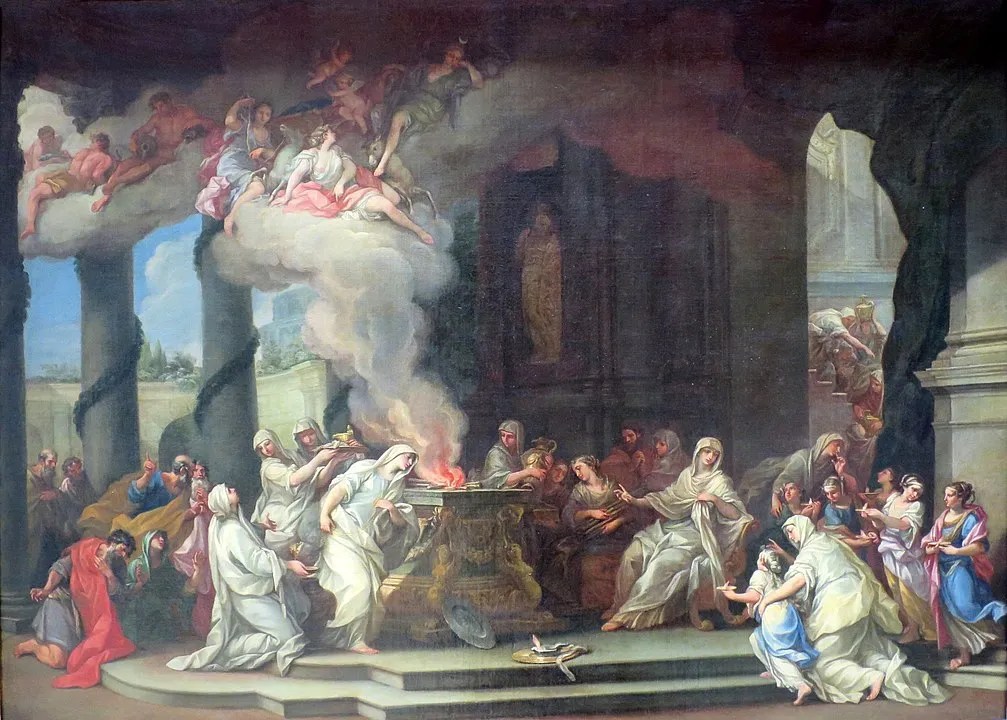
Even in death, Romans turned to fragrance. Funerals were drenched in scent—perfumed water to wash the body, aromatic oils to anoint it, scented cloths for wrapping. Incense smoke rose with the prayers of the mourners, guiding the soul to the next world. In Roman belief, the journey to the afterlife should begin not with fear, but with fragrance.
Beyond public rites, household altars also carried the scent of devotion. Families burned small offerings of incense or dripped sacred oils onto miniature shrines honoring the Lares and Penates—guardian spirits of the home. These everyday acts were simple but deeply scented gestures of faith and protection.
Scent even found its place in more mystical corners of Roman life—omens, love charms, healing rituals. People wore perfumed amulets or burned special herbs to invite good fortune or keep away illness. In Rome, to scent something was to mark it as meaningful—an act of reverence, memory, or transformation.
In a world where words faded and statues crumbled, fragrance lingered. It danced in the air long after the ceremony ended. It was invisible, yet unforgettable.
Because in Rome, worship wasn’t just seen or heard—it was smelled.
Coming Next : Fragrance and the Trade of Empire
 The Aromatic Journey
Leave a comment