Part 3 of the “Scent and the Roman Empire” Series.
If power in Rome was scented with opulence, then daily life was perfumed with ritual. For the average Roman—especially those of the upper class—scent wasn’t a luxury pulled out for special occasions. It was a rhythm of daily life, as essential as bread and wine.
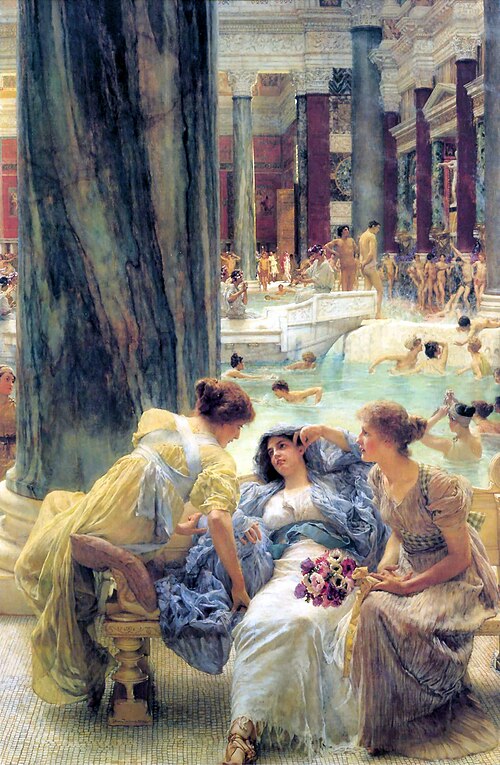
The day often began with a visit to the public baths, the thermae. These were not merely places for washing but centers of social life and grooming culture. After soaking, scrubbing, and steaming, bathers would finish by anointing themselves with unguents, fragrant oils tailored for different parts of the body. Specialized slaves called unctores assisted in applying these perfumes, rubbing them into the skin to both nourish and scent it. The fragrances lingered long after the bath—announcing a person’s status, cleanliness, and even sensual appeal.
For Roman women of means, fragrance was a key element of their beauty regimen. Many owned elaborately decorated unguentaria, small glass or ceramic bottles designed to hold their personal blends of perfumed oils. Recipes varied—some included rose and cinnamon for warmth, others mixed nard and saffron for an exotic allure. These oils were not just applied to the skin but to hair, clothing, bed linens, and even sandals. Some women perfumed their walls and curtains, while others added scent to furniture lacquer.
Fragrance even extended to pets and possessions. There are accounts of perfumed collars for dogs, and of wealthy Romans scenting their wine or using fragrant garlands at banquets to elevate the mood. Aromatic sachets were placed in drawers and storage chests to keep clothing scented, and seasonal perfumes were rotated much like wardrobes today.
Scent also played a role in romantic and social life. A person’s fragrance—or lack thereof—could affect their desirability. The poet Martial mockingly writes of guests who arrived at dinner parties with the stench of sweat and wine, rather than sweet myrrh and spikenard. In contrast, someone who smelled of distant, rare spices was immediately associated with sophistication, wealth, and global reach.
In a world without modern hygiene products or air fresheners, the use of scent was deeply strategic. It masked, enhanced, enchanted—and it marked identity. Romans knew that fragrance wasn’t just about smelling good. It was about being remembered.
In every corner of the Roman home and body, scent had a place.
The empire did not just rule the known world—it perfumed it.
Coming Next: Fragrance and the Divine
 The Aromatic Journey
Leave a comment