It wasn’t war or trade that brought the art of perfumery to France.
It was a wedding. And a woman named Catherine de’ Medici.
In 1533, a 14-year-old Catherine—niece of Pope Clement VII and member of the powerful Florentine Medici family—was married off to the future king of France, Henry II. Though arranged for political convenience, the marriage became a vehicle for cultural transformation—one scented in Florentine sophistication. She arrived in France not only with chefs and astrologers, but with a secret weapon: her personal perfumer, René le Florentin.
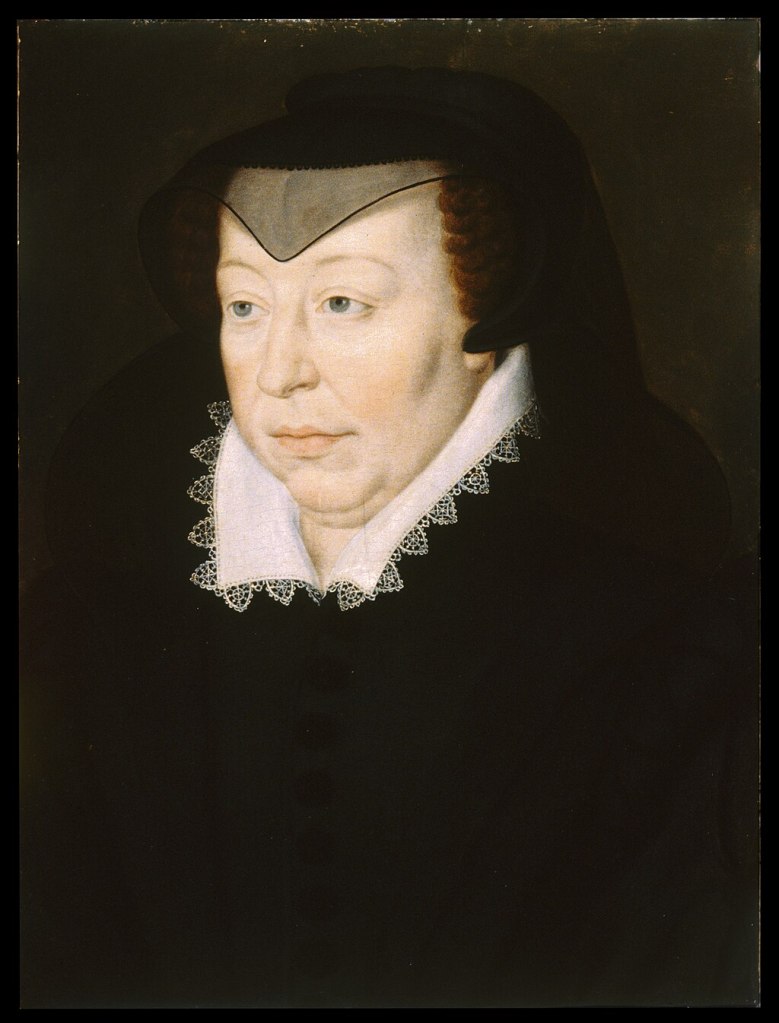
René wasn’t just a master of scent. He was also an alchemist, a pharmacist, and—according to some scandalous whispers—a poisoner. In the paranoid courts of 16th-century Europe, it wasn’t unusual to suspect that a whiff of perfume might carry more than just fragrance. Some believed Catherine’s scented gloves were laced with lethal substances. Whether true or not, these rumors gave her an aura of power wrapped in mystery—danger that smelled divine.
Perfume at the time was still a novelty in France. While Italians had refined the craft with distilled alcohols, essential oils, and exotic resins, the French were still masking odors with rose water or burning herbs. René changed that. Under Catherine’s patronage, he established one of France’s earliest perfume laboratories within the shadowy tunnels beneath the Queen’s residence in Paris—the Tuileries Palace. Here, perfumes were developed not just to delight but to manipulate, seduce, and protect.
Catherine helped spark a national obsession. Her fondness for scented gloves, imported Florentine oils, and luxurious bath essences quickly spread through the French court. Soon, perfumed gloves became a fashion essential for noblewomen, and fragrant oils were seen as a mark of refinement. The Medici style had taken root in French soil.
Perfume carried more than beauty—it conveyed power.
Catherine wielded scent the way she wielded influence: strategically. She understood that fragrance could control impressions, reinforce identity, and even intimidate rivals. She surrounded herself with scent—on her skin, in her hair, infused into the very fabrics she wore. In a court filled with suspicion and intrigue, Catherine didn’t just wear perfume. She weaponized it.
By the time her son, Charles IX, ascended the throne, the French elite were fully intoxicated with Italian-style fragrance. Perfume had become not only fashionable but institutionalized. Grasse, a sleepy town in southern France known for tanning leather, began shifting toward perfumed glove production—a change that would eventually make it the perfume capital of the world.
So, when we think of France as the global home of luxury perfume, we owe a quiet nod to a clever teenage queen from Florence who arrived not with swords, but with scent.
Catherine de’ Medici didn’t just bring perfume to France.
She brought power, wrapped in roses.
 The Aromatic Journey
Leave a comment