After Vasco da Gama opened the sea route to India in 1499, Europe began redrawing the map of fragrance—not with ink, but with sails and salt. Yet the real war of scent didn’t begin in India. It began thousands of miles farther east, across the equator, on a cluster of small, fertile islands now known as the Maluku Islands of Indonesia—once called the Spice Islands.
These islands were the world’s only source of clove at the time. Small, unopened flower buds, cloves were far more than flavoring agents in medieval Europe. They masked the stench of crowded cities, were burned to purify churches, carried as talismans against plague, and symbolized sanctity and sophistication. A handful of clove was worth more than gold. To dominate the islands that bloomed with that scent meant controlling not only a commodity but an entire olfactory empire.
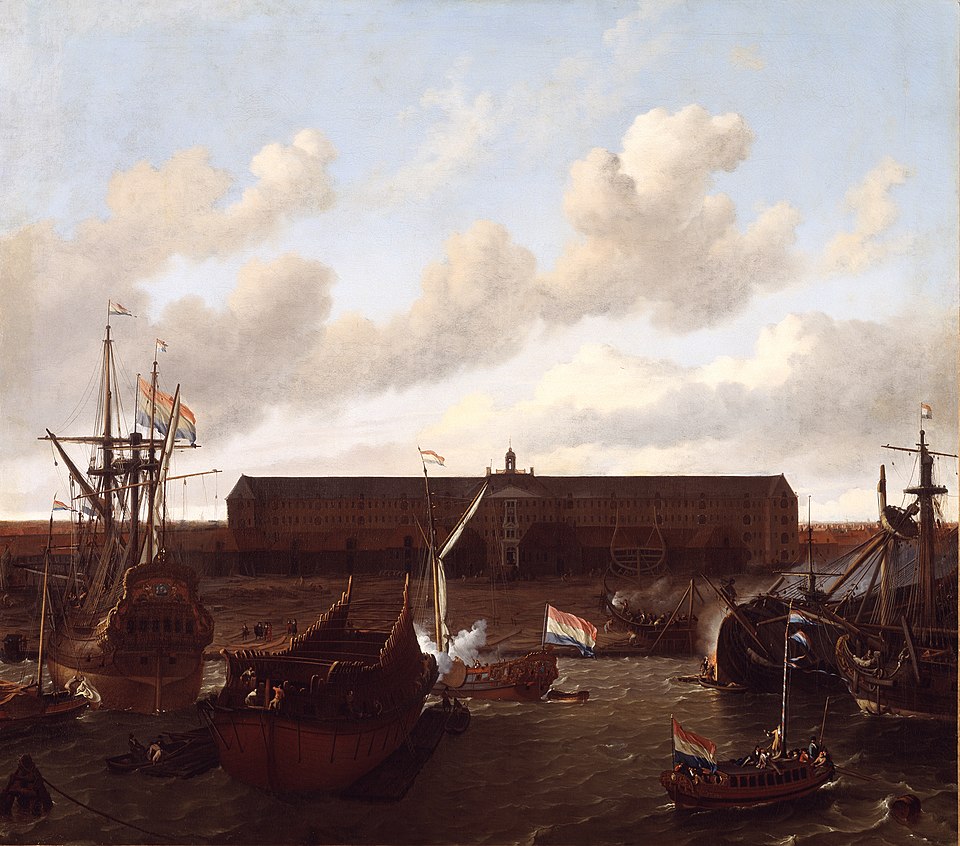
In 1602, the Dutch East India Company(Verenigde Oostindische Compagnie) -the VOC-was established, not as a mere trading body, but as a corporate leviathan with powers to wage war, sign treaties, and colonize territories. By 1605, Dutch forces landed in Ambon, one of the key Spice Islands, ousting Portuguese traders and laying claim to clove production. From then on, every tree, every bud, and every islander fell under the VOC’s iron grip.
Growing a clove tree without permission became illegal. Farmers could only harvest a set amount. VOC guards patrolled the archipelago. Storage depots dotted the islands like foreign fortresses. But economic control wasn’t enough. The VOC began systematically destroying clove trees on rival islands to inflate prices—burning forests, uprooting groves, and executing those who dared smuggle or plant them without sanction.
This was the beginning of scent as strategy, and fragrance as violence. Cloves became an object of economic desire and colonial cruelty.
By the time these buds made their way to Amsterdam, and then into the hands of perfumers in Paris and London, they were no longer the product of sun-soaked equatorial soil. They had been transformed—filtered through the colonial imagination and bottled as “Oriental,” “Exotic,” “Intense.” These weren’t just olfactory notes. They were carefully constructed fantasies—fragrances designed to evoke not the lived reality of Indonesian farmers, but a sanitized, luxurious vision of the ‘other.’
The labor, the saltwater crossings, the scorched earth, the blood in the soil—none of that was captured in the bottle. Consumers in Europe smelled sophistication, not suffering. The clove had traveled so far that its origin story had vanished into vapor. The political economy of scent had evaporated into a few drops on a silk collar, leaving behind only a trace of empire—undetectable, but never absent.
 The Aromatic Journey
Leave a comment