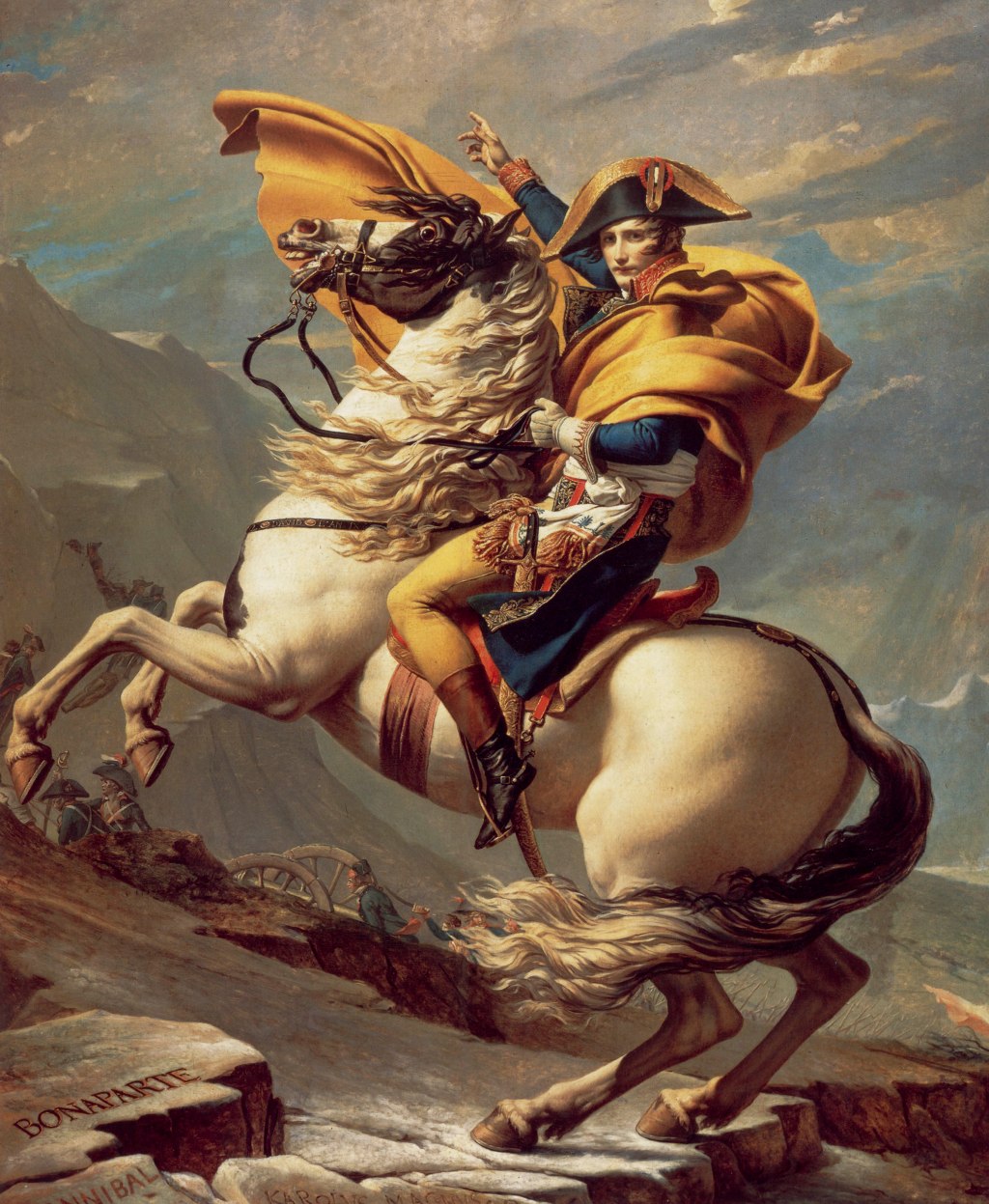
Columns of soldiers marched across the war-torn landscapes of Europe, leaving behind not only the scent of iron and gunpowder—but sometimes, a trail of citrus carried on the breeze.
In the mid-18th century, Europe was ablaze with conflict.
During the Seven Years’ War (1756–1763), French troops stationed near the city of Cologne encountered something extraordinary: a new kind of fragrance, Eau de Cologne.
In 1709, an Italian-born perfumer named Giovanni Maria Farina had crafted a scent unlike anything Europe had known.
Where traditional perfumes clung heavily to musk and animalic richness, Farina’s creation danced with light citrus notes—lemon, orange, bergamot, neroli—capturing the crispness of an Italian morning.
For the weary soldiers, Eau de Cologne was more than a fragrance.
It was a breath of freshness, a reminder of life beyond the smoke and the mud.
When the war ended, these soldiers returned to France carrying not just memories, but bottles of this invigorating scent.
Eau de Cologne soon made its way into the French aristocracy, gaining a foothold in salons, boudoirs, and even royal courts.
Among those who fell under its spell was a rising young officer—
Napoleon Bonaparte.
While the French elite clung to heavy musk-based perfumes, Napoleon chose something different.
He preferred the sharp, clean vitality of Eau de Cologne, a scent that seemed to slice through the stagnant air of war councils and ceremonial halls alike.
According to his valet Louis Constant, Napoleon’s use of Eau de Cologne bordered on obsession.
He would bathe in it, douse his body and garments, and travel with several bottles at hand.
Some accounts claim he ordered up to 60 bottles per month.
For Napoleon, Eau de Cologne was more than personal taste.
It was mental clarity, resilience, and invisible armor—the crisp signature of a man determined to conquer not just territories, but the very senses of those around him.
Yet the emperor’s downfall unleashed a different kind of battle.
After Napoleon’s exile and death, perfume houses across Europe rushed to associate themselves with his legend.
“Napoleon’s Cologne” became a coveted name—but one claimed by many.
In Cologne, rival shops sprang up, each asserting that they were the true heirs to Farina’s original formula.
At the time, trademark laws barely existed.
Anyone could use the name “Eau de Cologne,” and many did.
The original Farina family, whose creation had seduced a generation, found their name diluted amid a flood of imitators.
The confusion and disputes over the right to use the name fueled early calls for formal brand protection across Europe.
In fact, during Napoleon’s reign in 1810, a decree had been issued requiring medical products to disclose their ingredients—but perfumes were exempt, preserving their recipes as guarded secrets.
Perfume, even then, was recognized as more than a formula; it was story, mystique, and identity.
By the mid-19th century, as trademark registration systems slowly emerged, the battle over Eau de Cologne had already demonstrated a simple truth:
In the world of fragrance, the name could be as valuable as the scent itself.
Today’s iconic perfume brands owe their existence to these early struggles.
Behind every elegant bottle lies a history of soldiers, emperors, and artisans who understood that scent is not just a luxury—it is memory, power, and legacy.
The emperor may have fallen, but his fragrance still lingers in the air.
About This Series
Fragrance History: From Temples to Thrones is a journey through the forgotten pathways of scent, revealing how fragrance shaped civilization, power, art, and identity across the ages.
 The Aromatic Journey
Leave a reply to Perfume and Power: The Fragrant Court of Versailles – The Aromatic Journey Cancel reply